Feelin' the Heat
Michael Mann's heist western is 30 and just gets better with age

When I first saw Heat on its UK release in 1996, I didn’t like it that much. The main issue was the run time – almost three hours. It felt languorous and too sparing in its action.
But what the hell does anyone know about exceptional filmmaking at 16, or what it takes to realise such complex stories on screen? Teens rarely have the patience, attention span or life experience to invest in something this dense and layered.
As the years have come passed, my appreciation has soared, with different aspects making me sit back in awe. I’ll catch it whenever it’s on TV and occasionally something ushers me back in for a closer look, like Taffy Brodesser-Akner’s must-read Val Kilmer profile in the New York Times or the enigmatic late actor’s own documentary. More recently, the prequel-sequel novel that director Michael Mann wrote with Meg Gardiner, which I’ll come back to in a few minutes.
There are many reasons why Heat stands up today as one of the greatest films ever made. Above all, it’s the combination of gritty realism through exhaustive research, an intricate script – in which the writer/director imagined a “highly structured, realistic, symphonic drama” – and the intensity of the performances by an ensemble cast.
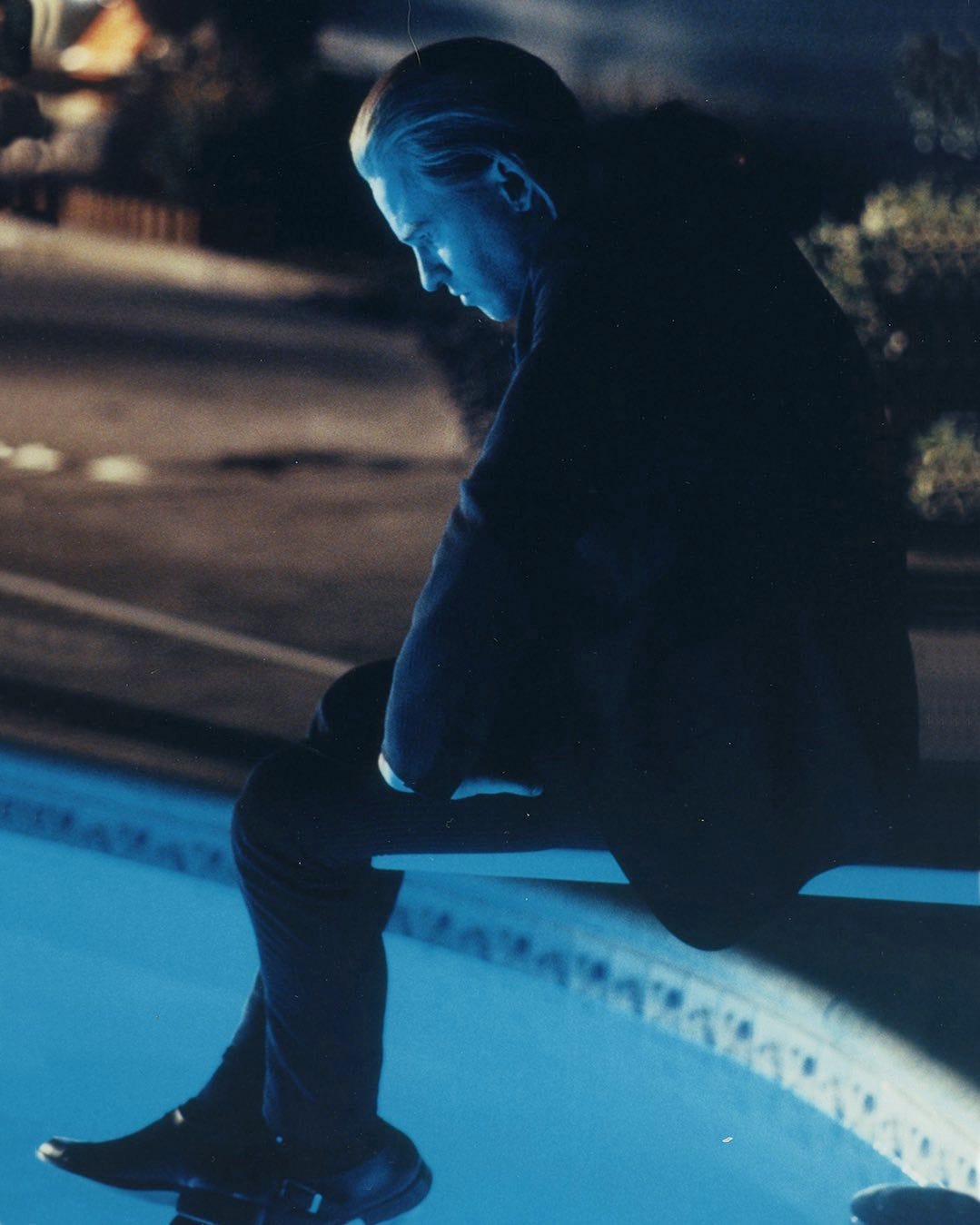
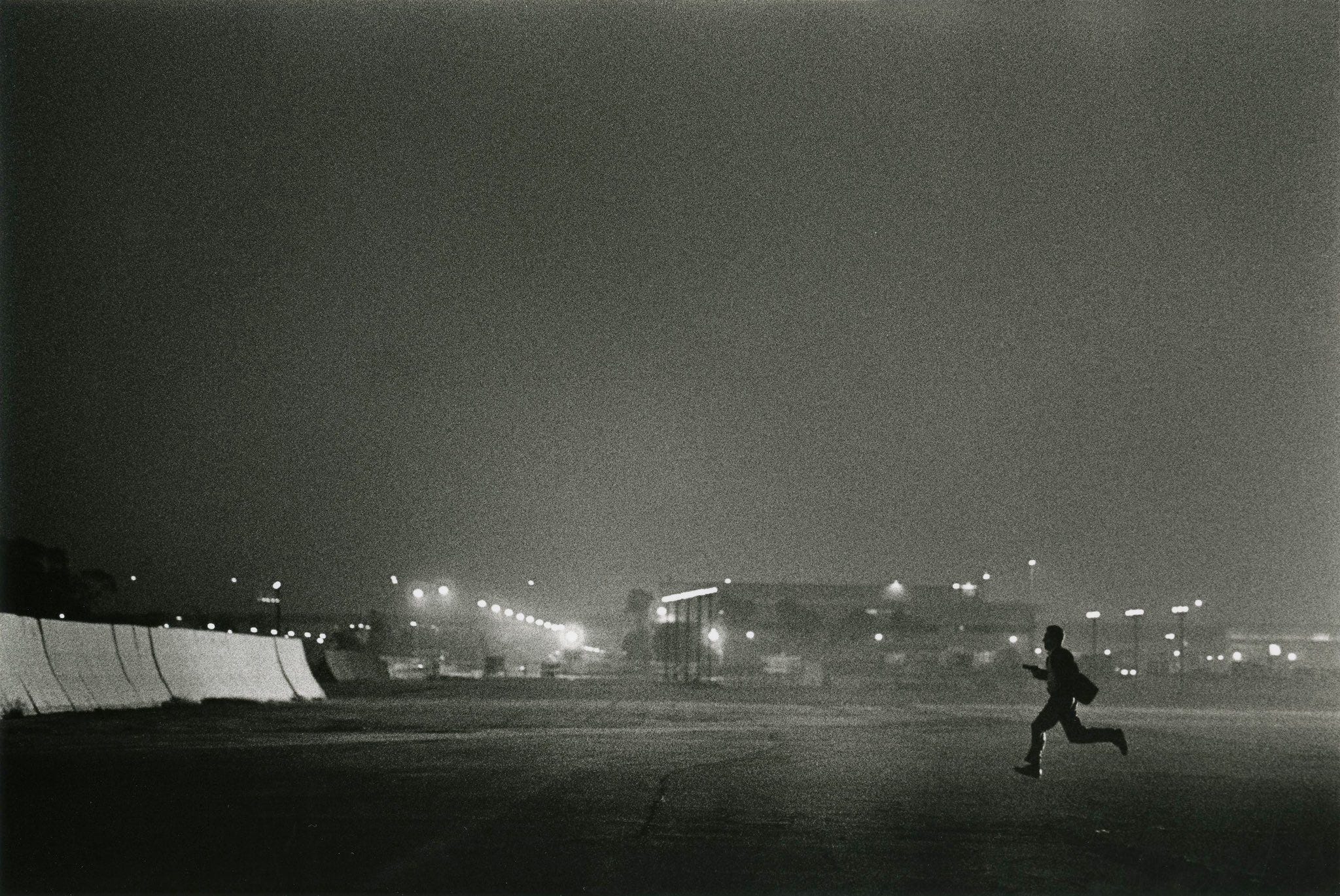
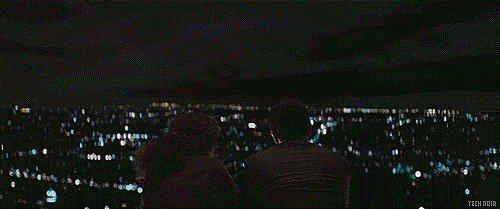
Style too, of course, with Mann and cinematographer Dante Spinotti capturing and rendering the noir allure of LA like few others could through blue-ish grey hues, asymmetric lines and use of negative space. They employed a very textural approach to each frame, from action set-pieces to moody skylines and telling looks. Each pair of eyes is working overtime in this movie.
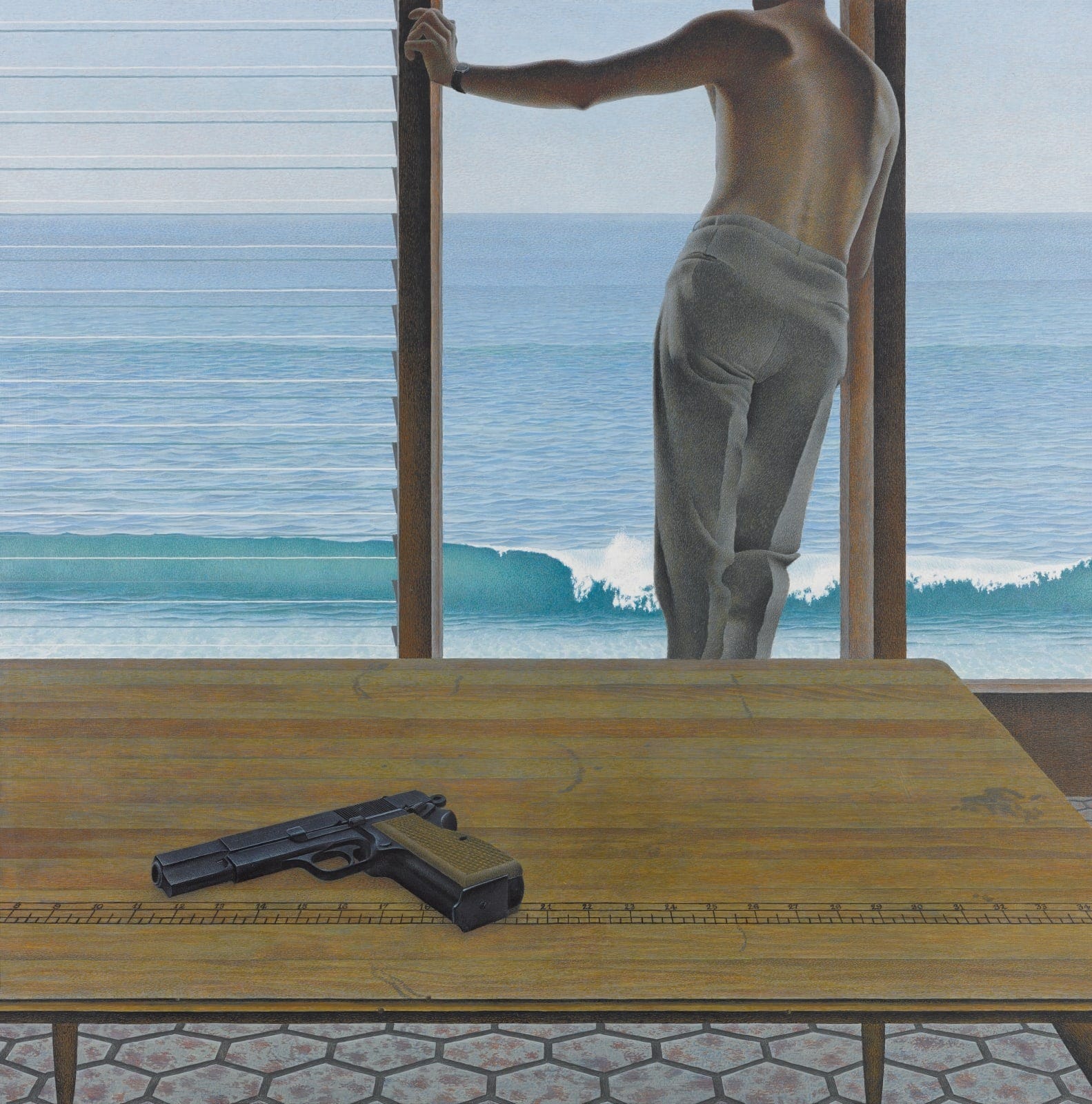
Visual art also inspired some of the shots, including Edward Hopper’s paintings and Ed Ruscha’s photography. The best example, however, is Alex Colville, whose painting Pacific from 1967 was a reference for this perspective on mastermind Neil McCauley’s sparse home and his sense of alienation. Or as Mann has described it, his “condition of loneliness.”
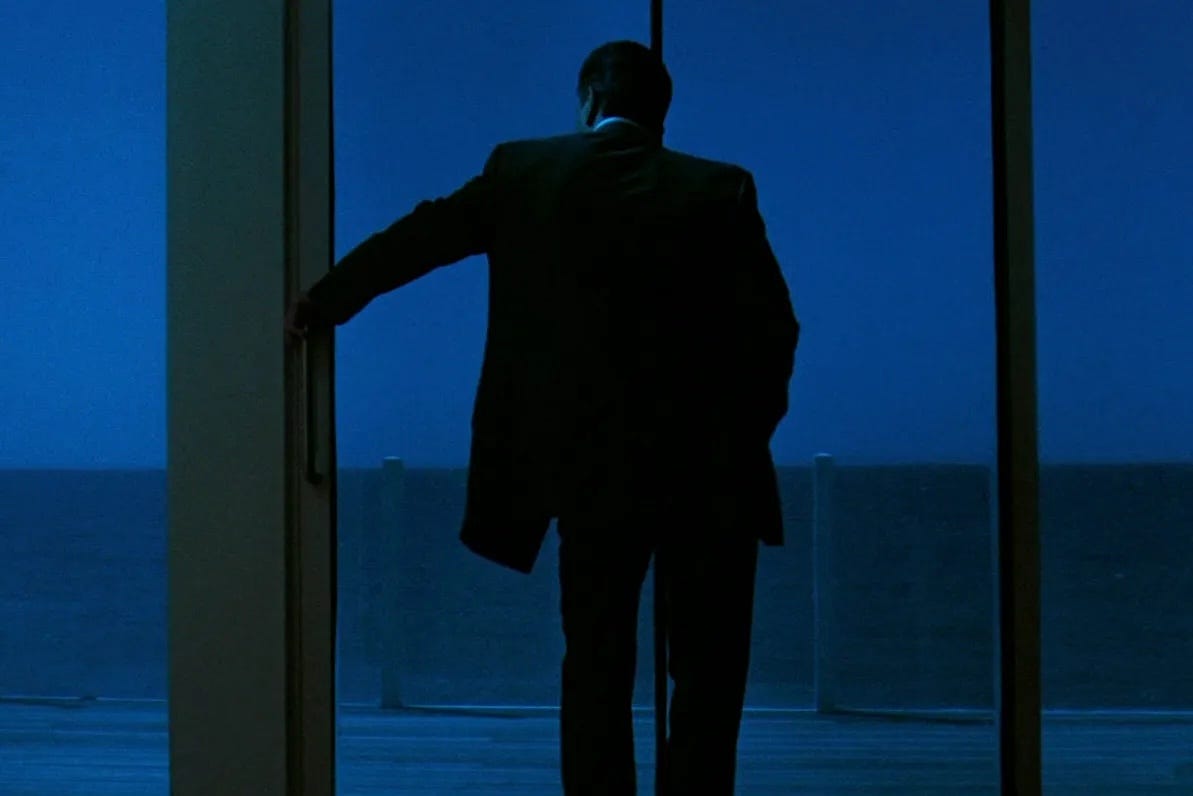
Set designers even added a cobalt blue pigment to the windows to create a vivid ocean vista for viewers to lose themselves in, like McCauley.
Meanwhile, the Elliot Goldenthal score heightens the sense of foreboding with its throbbing tension. And the use of Moby’s ‘God Moving Over the Face of the Waters’ with the Kronos Quartet is one of the greatest closing needle drops in all cinema.
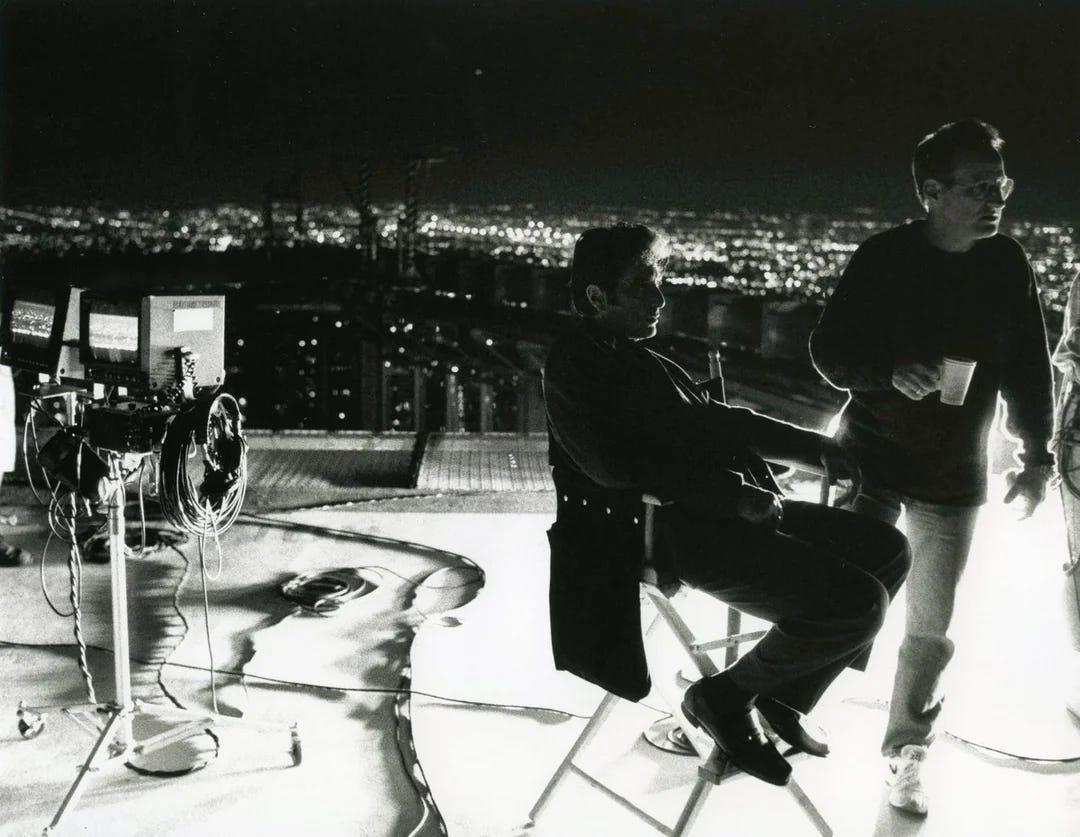
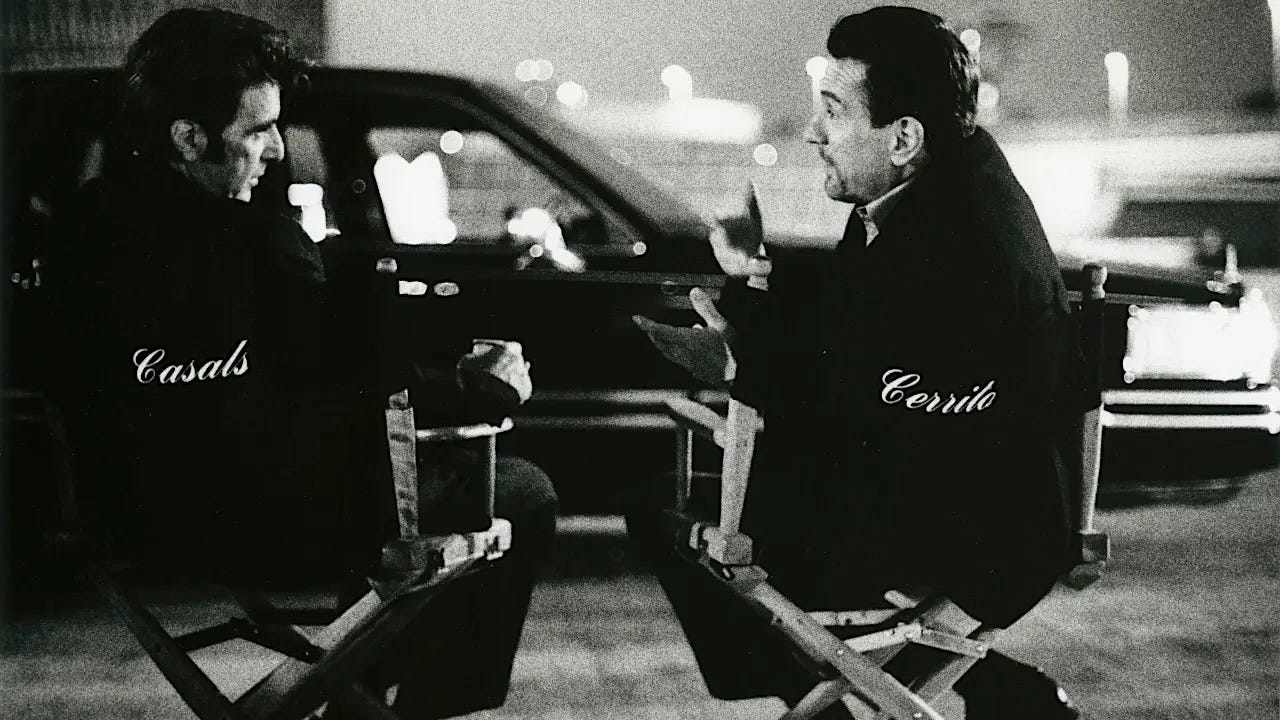
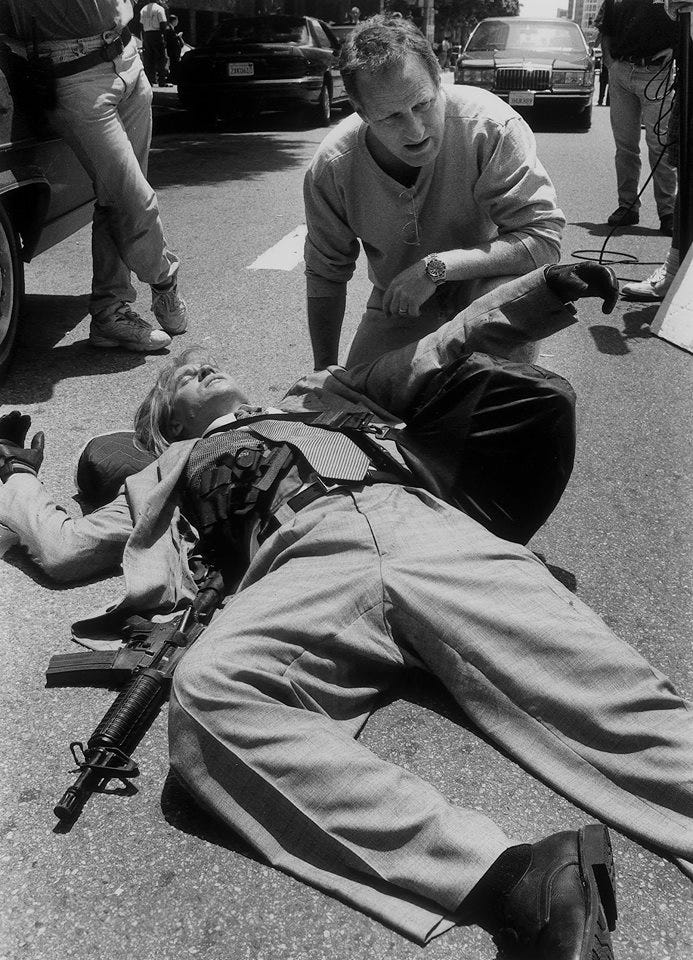
The director took more than 20 years to hone the story, TV pilot LA Takedown serving as a proof of concept along the way. He consulted experts such as Chuck Adamson (the real-life Lt Vincent Hanna) and one-time criminal Eddie Bunker, whose book No Beast So Fierce was required reading for the cast. Mann rode along with LAPD homicide and other officers at night and would make file after file of detailed notes on locations, backstories, edits etc
The cast spent months living in their characters, Robert De Niro (who plays Neil McCauley) training with his crew on firing ranges under former SAS man Andy McNab, while Al Pacino and his team did the same with real police officers.
Ashley Judd (who plays Sharlene, the spouse of Kilmer’s character Chris) and Diane Venora (Hanna’s partner Justine) met the wives of criminals to gain a deeper insight into what keeps these women by their side. De Niro and Danny Trejo cased a bank for real and Tom Sizemore made a loan application in character as Michael Cherrito.
The pacing and rhythm are sublime – now I get it – as we peek into private lives on both sides of the law, and see how the two leads are adrift in their own ways. In that sense, Heat went way beyond any cops and robbers dynamic, drawing us further into the realm of moral complexity, where rooting for or against someone isn’t as clear-cut. We see a character for more than their flaws.
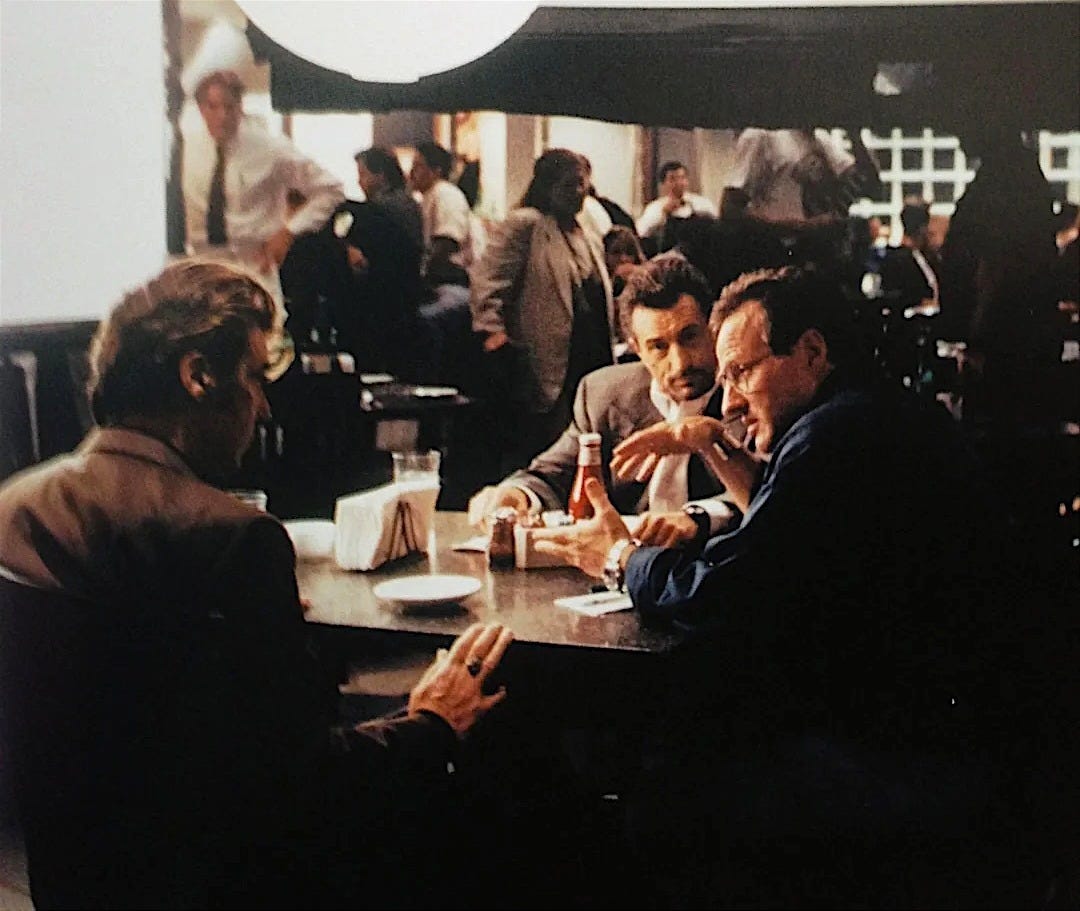
Everything builds nicely to a long-awaited face-off between the two protagonists, but it’s not the confrontation we were expecting. The first ever scene shared by these two iconic contemporaries is a masterclass in understated acting – all subtle head movements, dramatic pauses and glances – as two very different personalities see themselves in one another over an untouched cup of coffee. There is respect in that brief encounter but also fatality. Next time, only one of them will walk away.
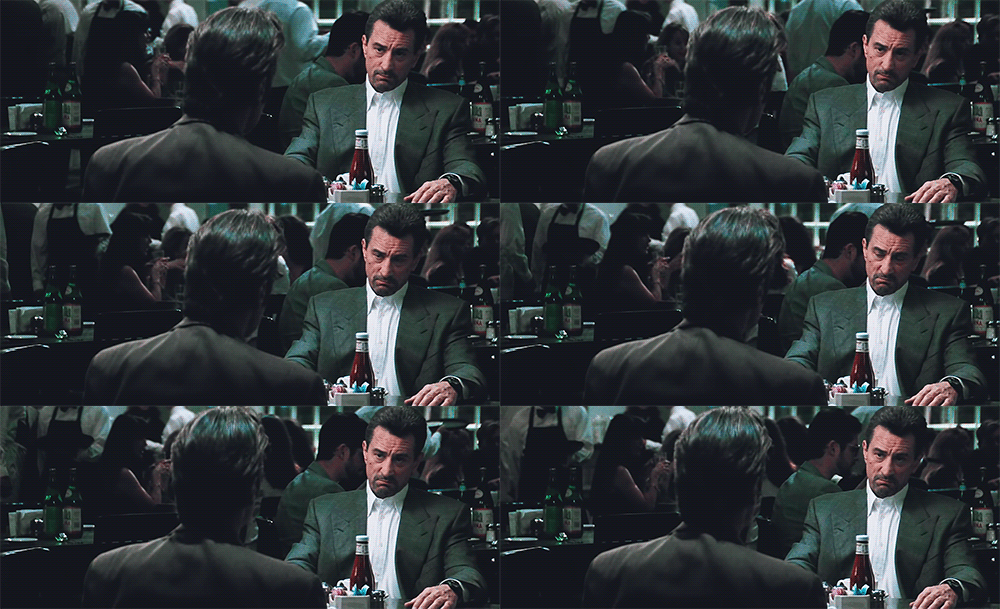
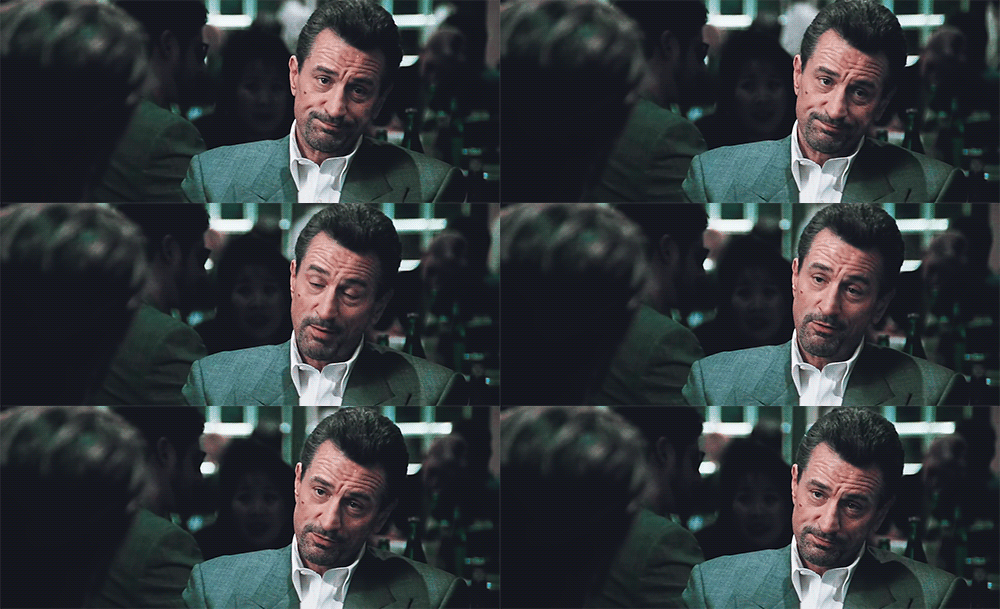
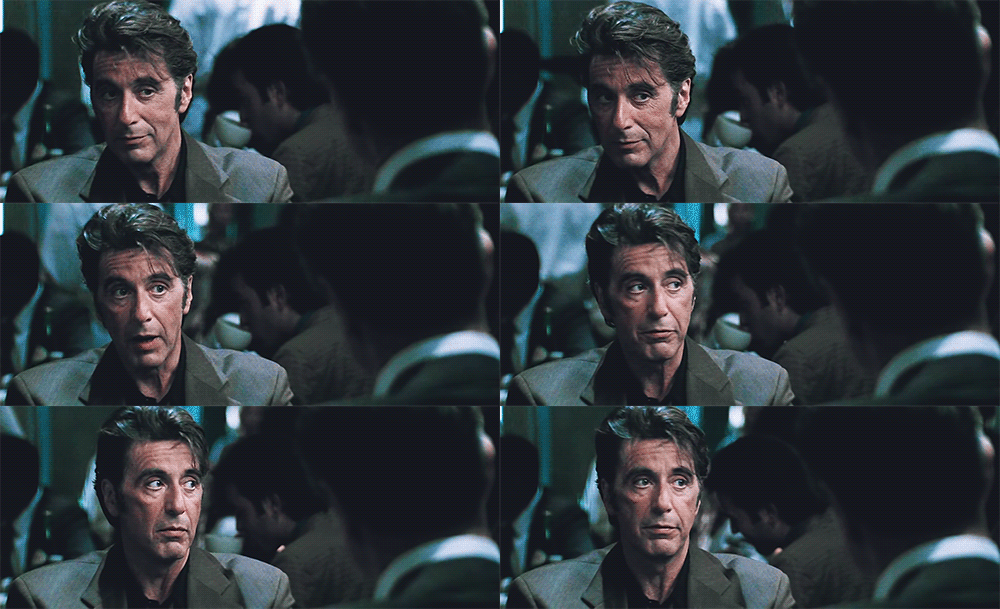
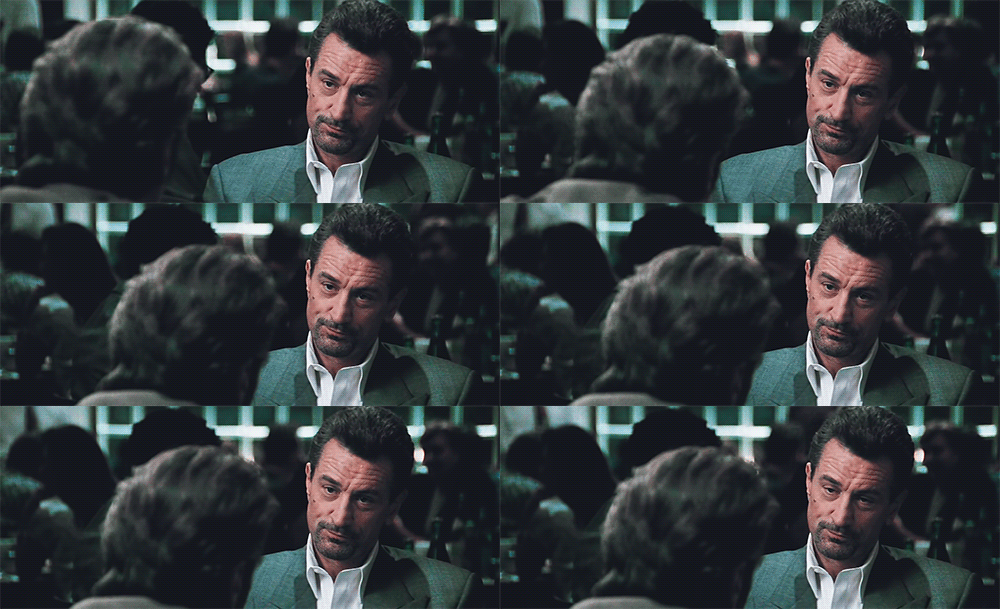
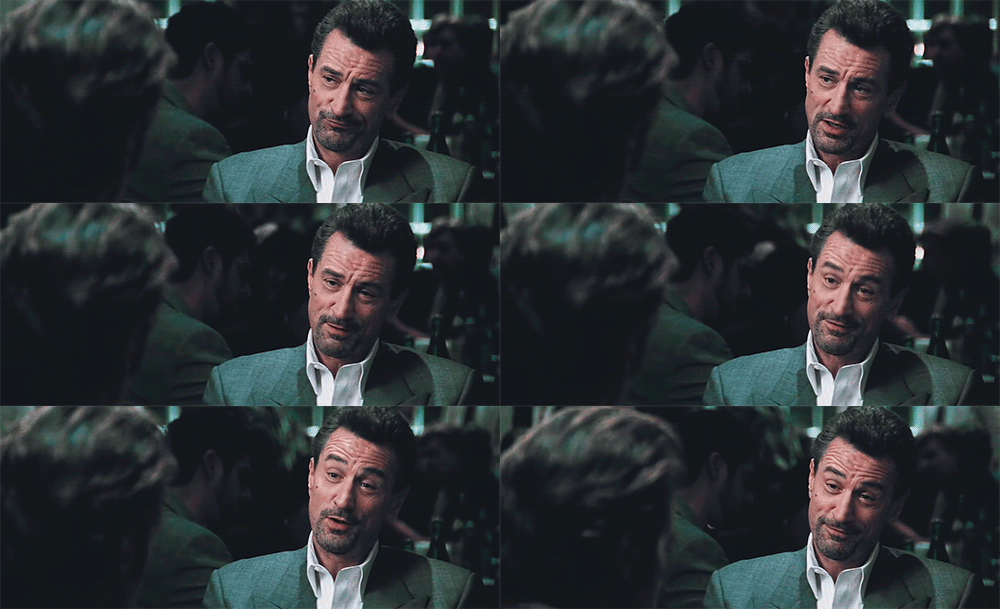
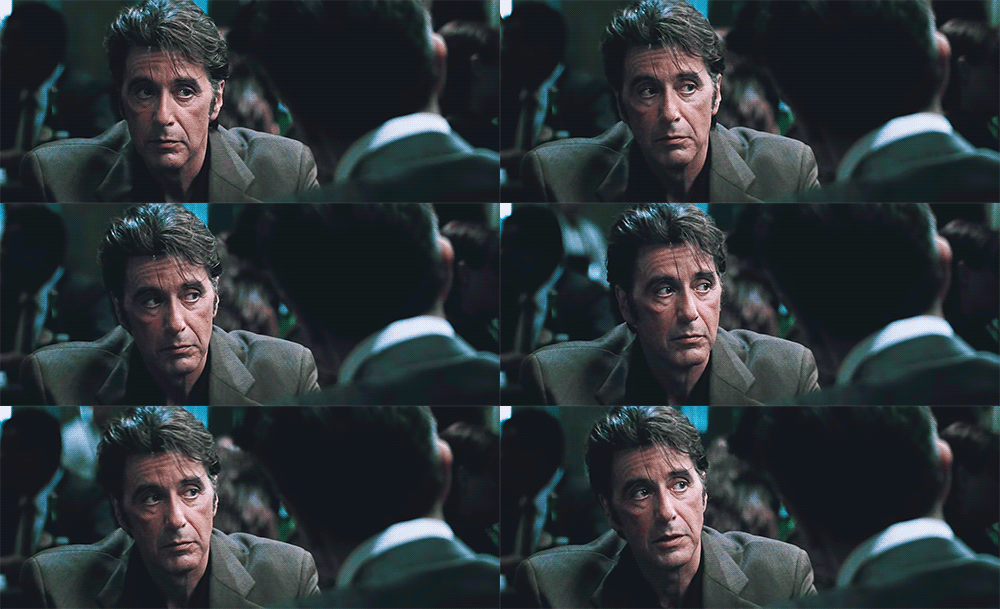
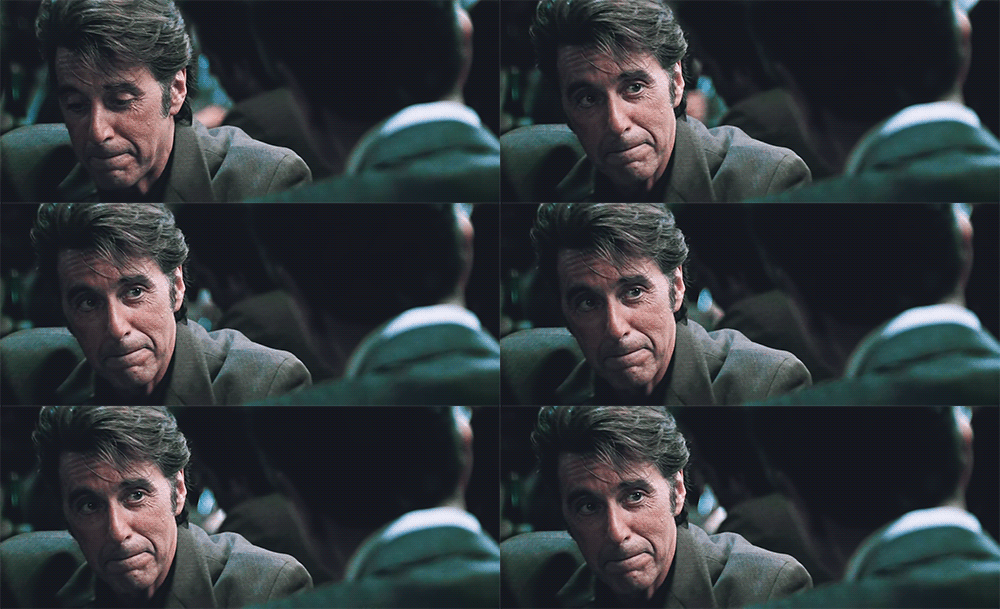
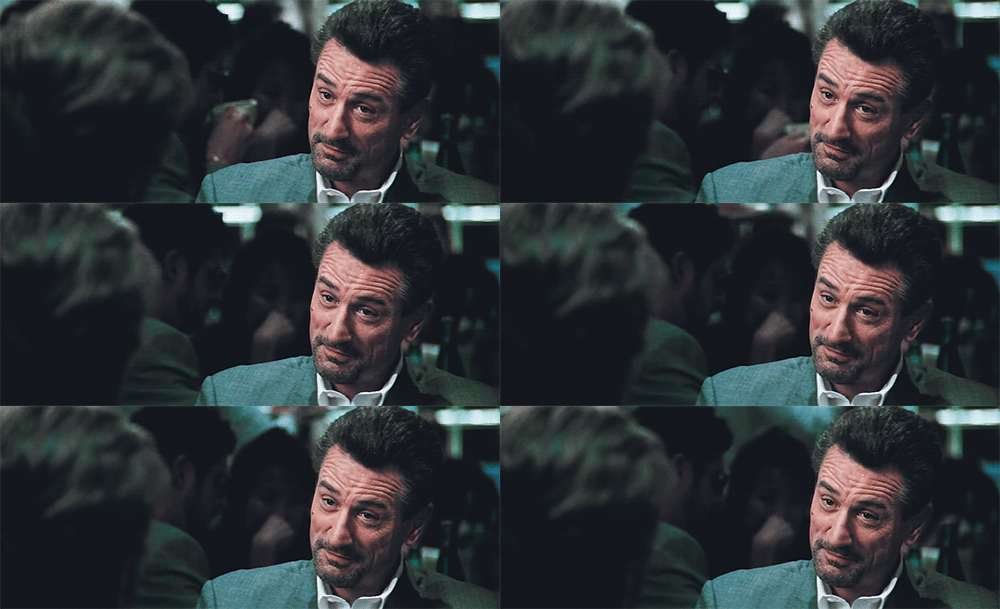
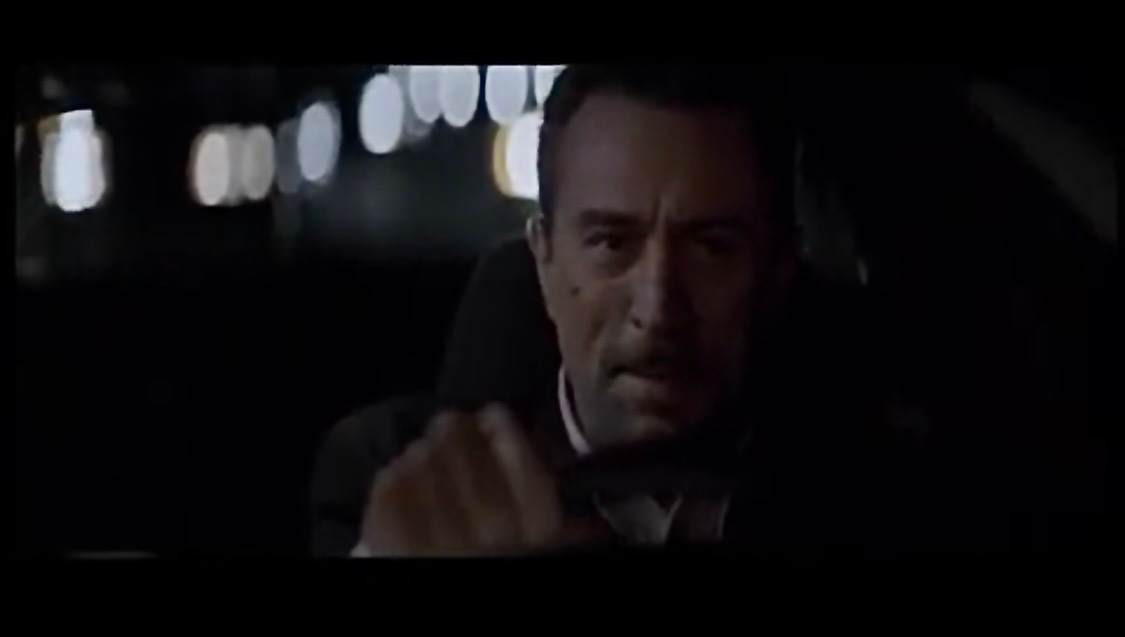
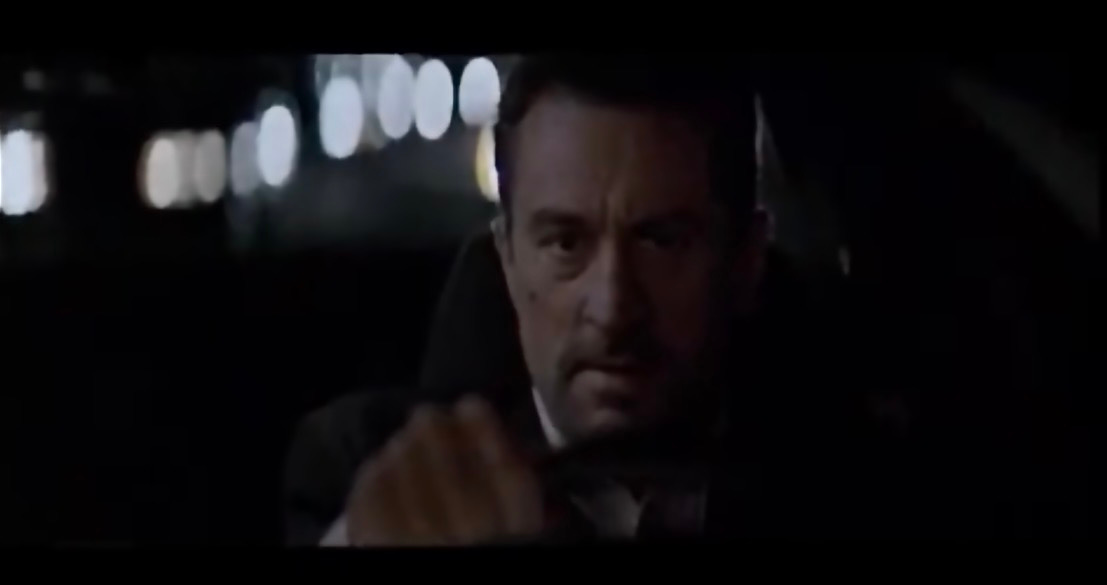
Apart from Pacino’s frequent eruptions, my favourite acting moment is where De Niro is almost home free with Eady. Zipping along the freeway, he tussles between vengeance and salvation, his face going from quiet contentment to simmering rage in an instant. A scene Mann and De Niro spent hours over days making sure they got right. My pulse always quickens just thinking about it. What would I do in that situation? Mann is so good at putting the viewer in such predicaments.
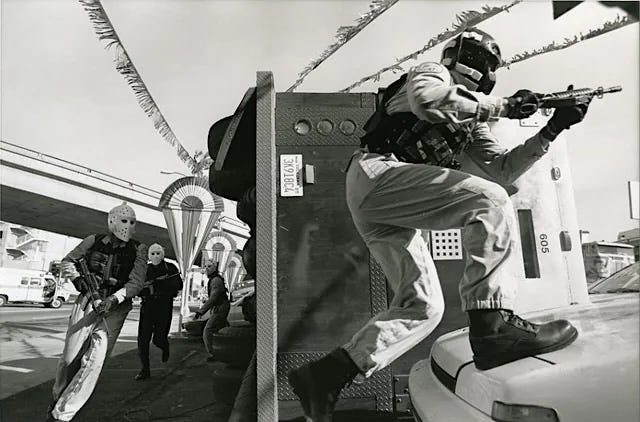
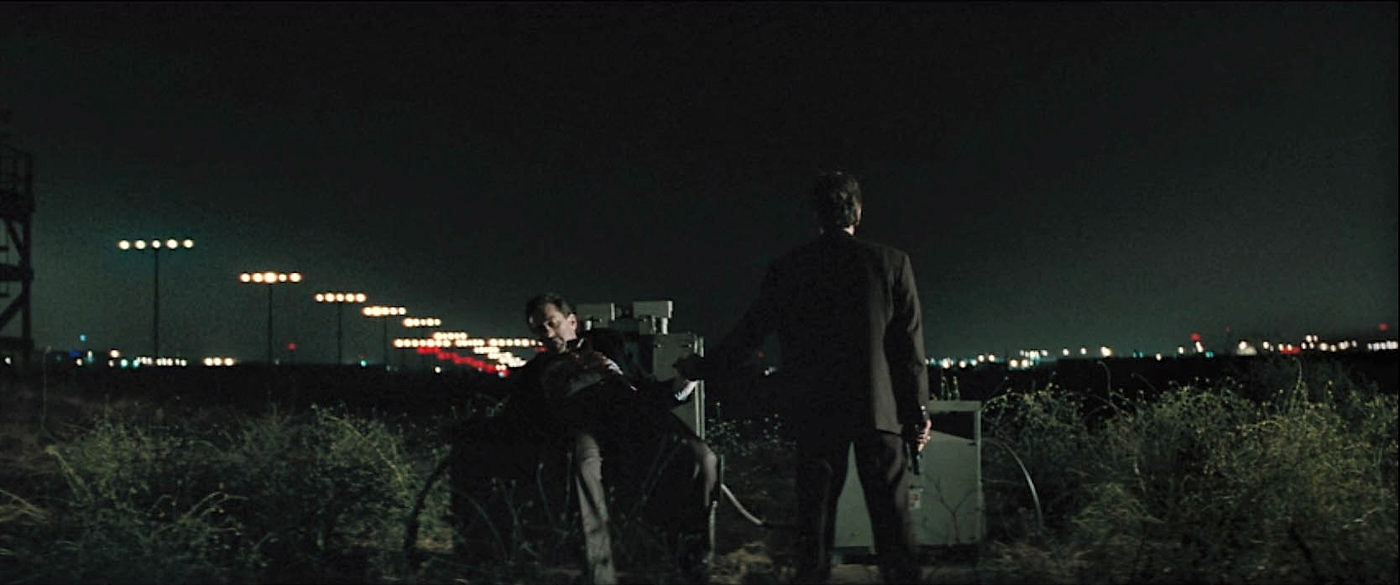
What is truly criminal about this film is how it was overlooked at the Oscars. Not one award, not even for sound. Go and watch the big downtown shootout or the climax at LAX – both reverberating for real, no tricks – and tell me you aren’t living every second of them through your ears.
So it was with much glee that I read about the novel that Mann worked on with Meg Gardiner. And that the book will now become a feature film released by Amazon MGM, with Mann adapting the screenplay. Its conception wasn’t an act of retribution, but I enjoy framing it as such. The veteran filmmaker returning to this dark universe more than three decades later to show us what a maximalist thriller looks like, and why he is one of the best in the business.
I can’t be the only one who wonders what made McCauley so detached and wary of the “heat around the corner”. Or why Hanna has this relentlessness about him, why “all I am is what I’m going after”, to the detriment of all else in his life. Or what happens to Kilmer’s character Shiherlis after he manages to evade the cops thanks to a blackjack wave of Sharlene’s hand.
The new tale will go back and forth, seven years before and after the events of the first film, “from the streets of LA to the inner sancta of rival Taiwanese crime syndicates in Paraguay to a massive drug cartel money-laundering operation just over the border in Mexico,” according to the press blurb.
The prequel portion plays out in Chicago where McCauley and his crew are taking scores, while Hanna is pursuing sinister home invader Otis Wardell, who makes the first film’s psychopath Waingro look like a boy scout. McCauley later crosses paths with Wardell while trying to rip off a Mexican cartel’s stash house. His brutal intervention changes the course of McCauley’s life.
Fast forward to 2002 and Shiherlis has fled to Paraguay with the help of Jon Voight’s fixer character Nate. He gets a job as a hi-tech security expert and becomes embroiled in a turf war between Taiwanese families in organised crime. He also gets involved with one of the key players, Ana, which raises the stakes. A big part of this new installment is seeing what the one-time accomplice does with his newfound agency and independence. Has he truly left behind his old life with Sharlene and Dominic?
Eventually, his business takes him back to LA, where Wardell is now at large. Hanna is working in the city and resumes his search, while Shiherlis has a score to settle. The scene is set for an explosive showdown. Under Mann’s direction, I’m confident this action-packed climax will be extraordinary.
Having read the book, I can tell you that the way the co-authors have brought together these storyline threads is masterful. They have grafted rich detail onto the lives of people we already know, while building out the world to introduce new key figures like Wardell. Though his menace looms large throughout, this antagonist has been written sparingly to allow the theatre of the mind to render him in full terror. The Paraguay years will need a tight edit, however.
Lots of heavy hitters are in the casting conversation, including Adam Driver as McCauley, Oscar Isaac as Hanna and Austin Butler as Chris Shiherlis. Leonardo DiCaprio says he will be involved, calling Heat 2 a homage to the original but promising it will be “its own unique entity”. The two leads are important but who plays Wardell will also be key.
Look at me, getting ahead of myself here. The purpose of this dispatch is to make an unusual Christmas movie recommendation: set aside three hours to savour Heat.
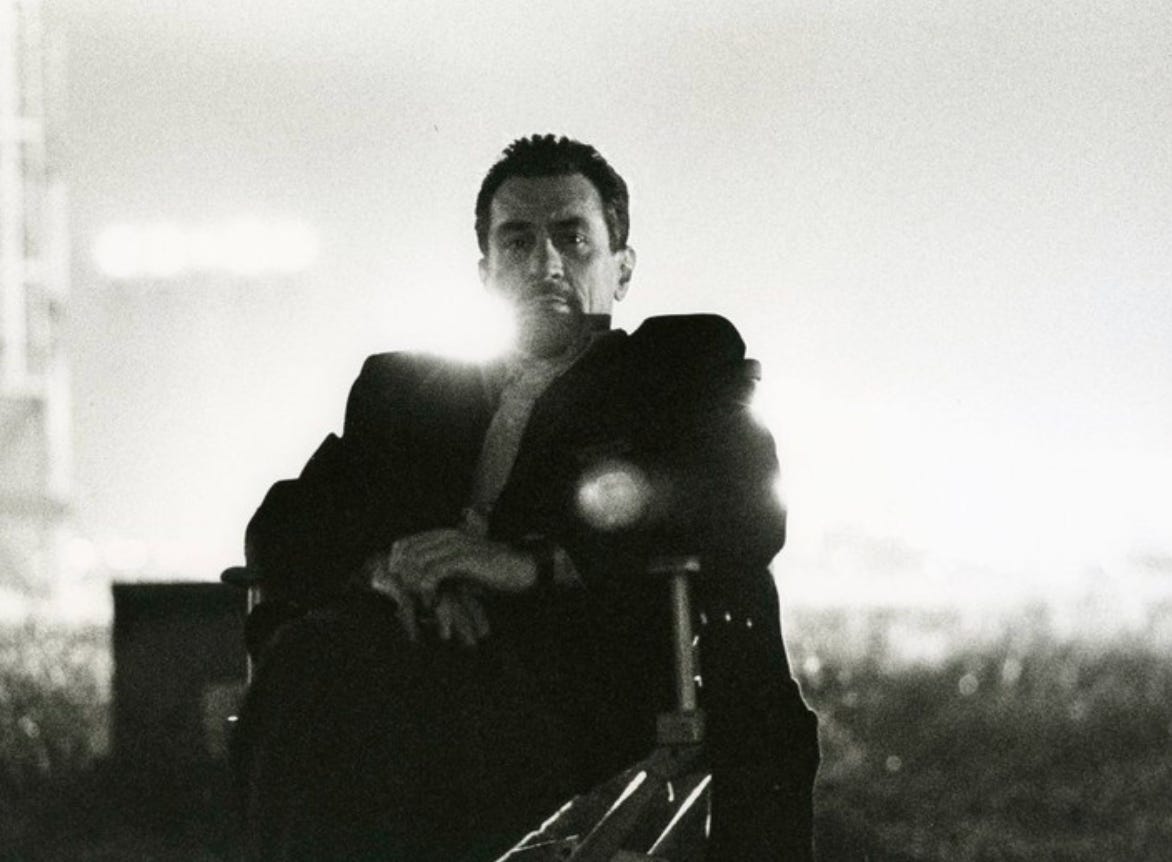
Who cares if there isn’t a bauble or novelty knit in sight? No feel-good romance, unless we’re talking about twin flames Hanna and McCauley… instead, get caught up in Mann’s meticulously crafted world and witness two of the greatest actors of any era at their peak.
For a deeper dissection, you can listen to One Heat Minute, a podcast that analyses the movie 60 seconds at a time. Yes, really. Start with host Blake Howard talking to Guillermo del Toro, who calls Mann an “LA poet”. Or The Rewatchables, where Heat has featured more than any other film.