
Candle-lit
Playwright Chadwick Boseman’s rallying cry for black lives almost brings the house down

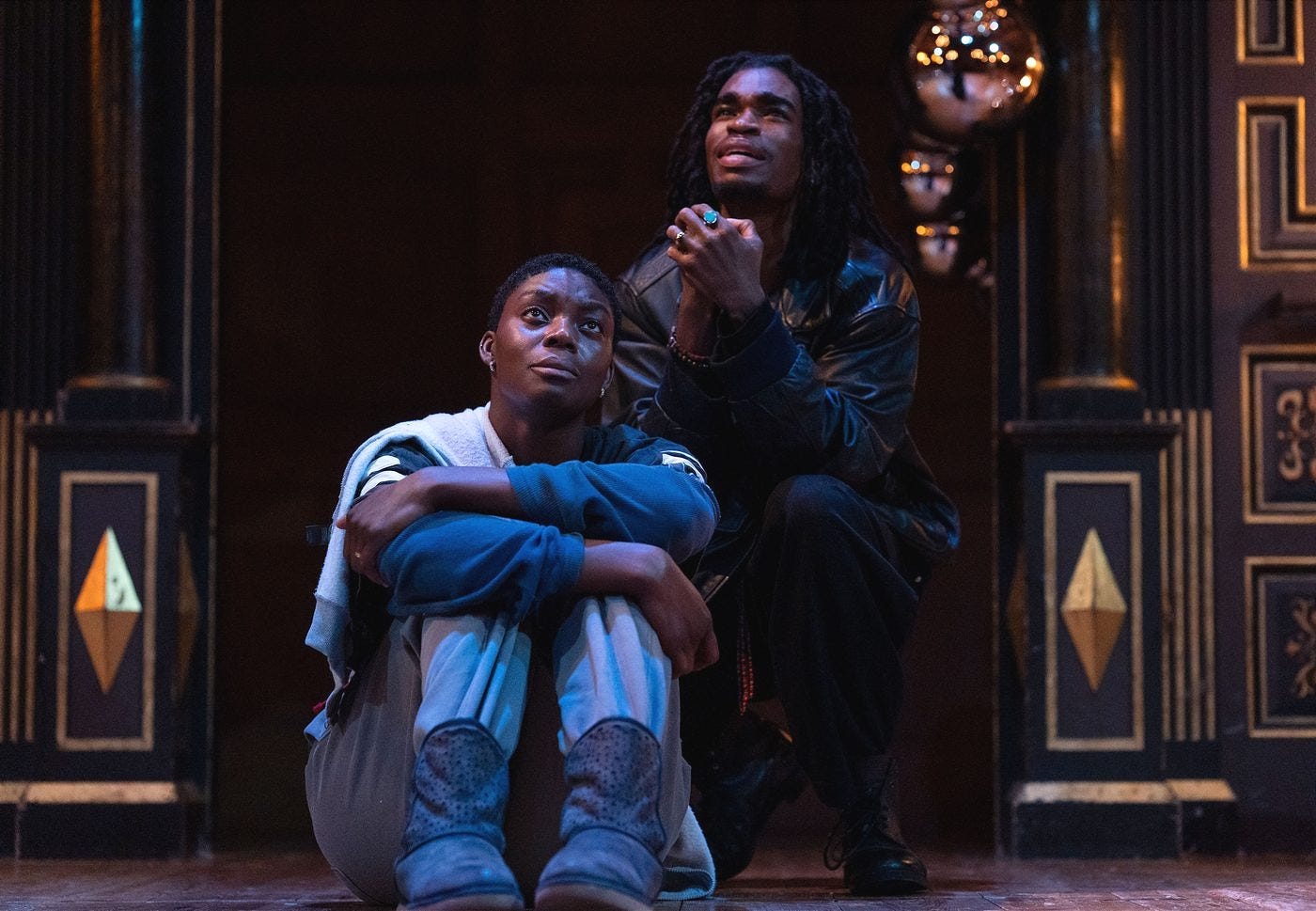
I’m amazed that the little Sam Wanamaker Playhouse is still standing after feeling the full force of Chadwick Boseman’s Deep Azure. There was beatboxing, chanting, wailing, gyrating … often several of these elements happening at once.
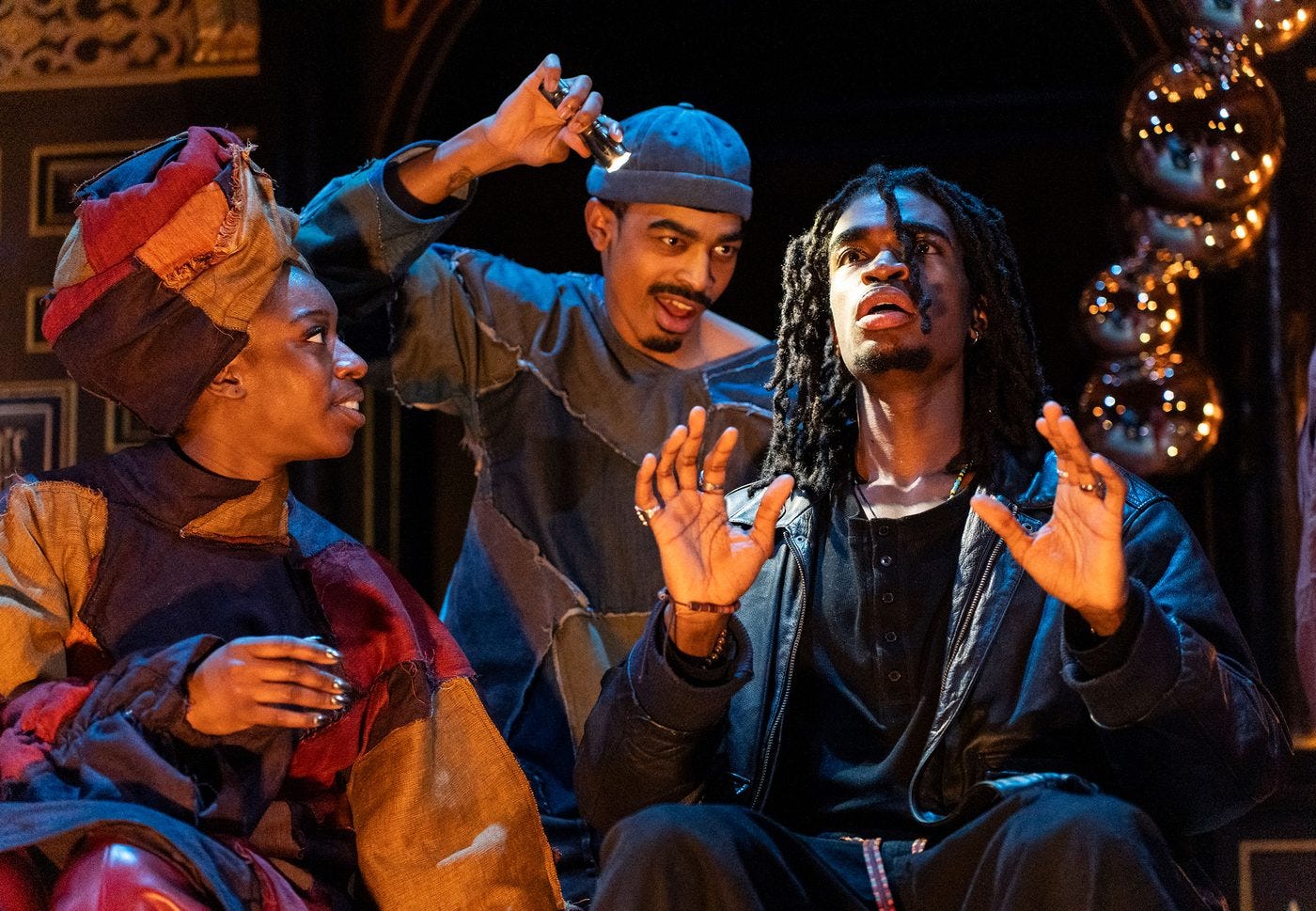
A marching band as Shakespearean chorus – dressed in stars and stripes one minute, then Afrofuturistic spacesuits the next – pulling your attention up, down, high and low. Actors changing characters in the blink of an eye. Couplets being sprayed like hip-hop bars. The kinetic energy of this production was unlike anything I have ever witnessed. Bold just won’t cover it.
The subject matter alone gets the pulse racing. Azure (Selina Jones) is reeling and raging at the police killing of her fiancé Deep (Jaydon Elijah), a much-loved student at Mecca University. Consumed by grief, her self-neglect leads to bulimia as she spirals in a desperate pursuit of justice … or vengeance.
Azure’s friends, each mourning Deep in their own way, attempt to hold her as only black love could do. To reconnect her to joy and laughter, even if they lie in the past. But she is mostly beyond reach. In the aforementioned chorus, the Heavenly MCs of Street Knowledge, SK Good (Aminita Francis) and SK Evil (Imani Yahshua) battle for possession of Azure’s soul. Then the discovery of wicked betrayal threatens to take her to an even darker place.
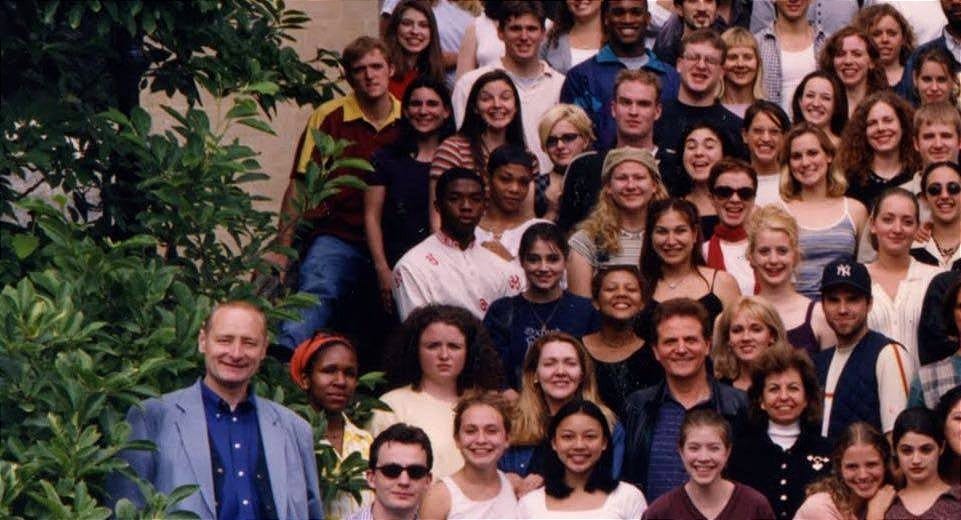
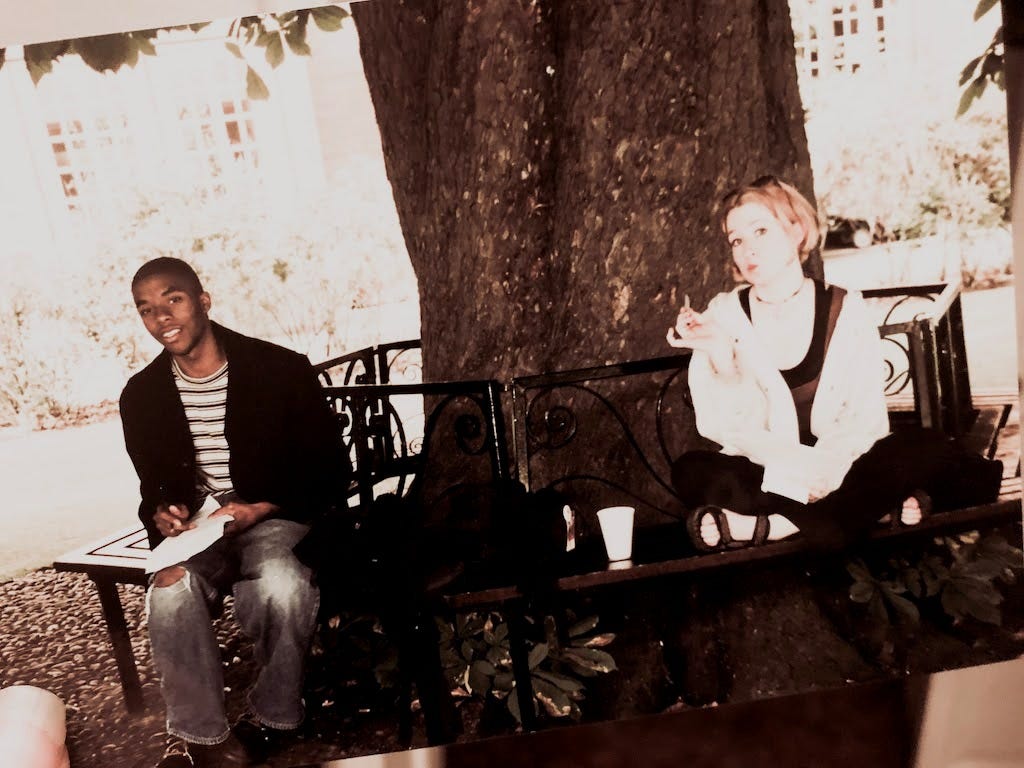
Boseman, who graduated from Howard University in 2000 with a Bachelor of Fine Arts in Directing, took inspiration from the death of friend and classmate Prince Carmen Jones Jr, who was shot 16 times by a Prince George’s County police officer. A case of mistaken identity, with the perpetrator never brought to justice.
In response, Boseman conceived Deep Azure as “an amalgamation of hop-hop poetry, jazz and blues slang, delivered with the sensibility of the classically trained actor.” It’s not well known that the Black Panther star studied the Bard while part of the British American Drama Academy at Oxford University in 1998. Some of this current cast later followed in his footsteps to the UK.
Despite all the on-stage dynamism in director Tristan Fynn-Aiduenu’s interpretation, it’s Boseman’s bending of this sacred form to a black vernacular that I found most exhilarating. The wit and wisdom, the precision and endless swagger of his lyricism. You know the writing is exceptional when you sit there wishing you had the words in front of you to run it back. For some, the excessive rhyming might verge on affectation but I was acclimatised enough in the first quarter to flow along.
The gritty social realism of the play will stir anyone angered at the rising numbers of black victims of police brutality over the intervening decades. However, there is a subtler resonance to this story and its portrayal of bereavement. In quieter moments, we see the lovers communing with one another after the tragedy … beyond the physical realm. Elijah’s elusive movements animating the spectral Deep.
Kamilah Forbes, executive producer at the Apollo Theatre and once a co-member of the Playwrights Lab with Boseman (or Chad, Aharon Sun of the Griots as she then knew him), wrote a beautiful letter to her friend after his passing in 2020. In it, she praises his discipline, focus and stillness, but also how he could see the link between black history and mythology.
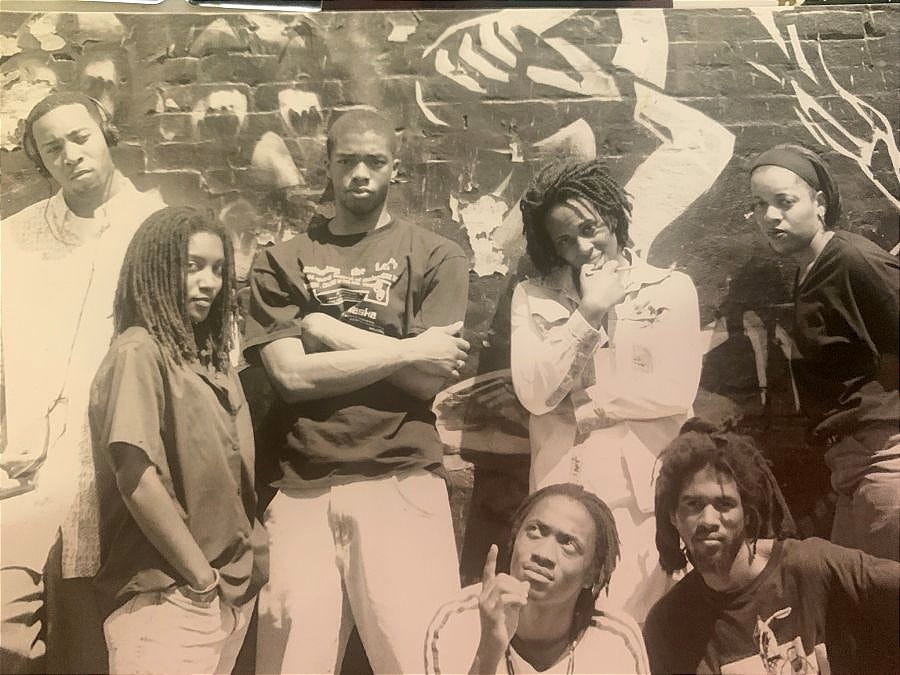
“You would observe human behaviour and chuckle at moments that many would find curious. But Chad, you also filtered the world through a cosmic lens – a lens that saw men as gods and recognised godly beauty in the mundane.”
Derrick Sanders, who commissioned the first incarnation of Deep Azure at Chicago’s Congo Square Theatre, also acknowledged the otherworldliness in Boseman’s writing in an interview with the Guardian.
“His material was always heightened and spoke to the spiritual world – not exactly magical realism but the spirits and the motivations for the characters are intertwined. That’s what he believed: that the spirits motivated your mood and that the ancestors were with you.”
In the Church of Metamorphosis, as the transformed Sam Wanamaker Playhouse has now become, those ancestors are all around Deep, Azure and the rest of us. There are murals of Biggie, Tupac, Aaliyah, Ma Rainey, Sylvester, Prince Carmen Jones Jr, Deep anointed as a Luna goddess… Revolving silver spheres refract the candlelight, further distorting her and our sense of reality.
Fynn-Aiduenu set out to make a play with music, as opposed to a musical. That sounds quite ordered, but when Deep Azure hits full pelt, the chorus cutting like a DJ between anything from the Cheers theme and ‘Sweetest Taboo’ to ‘You’re All I Need to Get By’ and OutKast, as voices you can’t quite locate make proclamations that can’t cut through the cacophony, it can all become a little overwhelming.
When Boseman’s prose is given space to breathe, articulated particularly well by Jones in various states of mind, I was able to lock into the core emotion or intention of a scene more easily.
There were also a few too many threads to pick up in the narrative. Rasputin felt like a big detour, unless someone can tell me the relevance of 20th-Century Tzarist Russia. Elsewhere, when the chorus became pigeons, I wasn’t the only one confused.
Better to spend that time unpacking Tone’s complicity in a system that leads to a black man (accidentally) killing another black man. He’s a friend of Deep and Azure who is also a police agent. When this character’s inner conflict seeps closer to the surface, Elijah Cook is at his best.
As lots of reviewers have argued, a shorter runtime would have given the production clearer focus and fluidity. But if someone were to argue that the strength of this production is its maximalism, and that sensory overload should be the default state of this world, I wouldn’t argue too much.
All in all, it was a deeply inspiring afternoon of close-quarters theatre. A reminder of the potential of this medium to transcend time and space.
I must read more of Boseman’s work. What a beautiful soul he was. And a leader.
Deep Azure is on at the Sam Wanamaker Playhouse until 2 May.